Insights · Technology
VOIP Business Phone System vs Traditional Phones
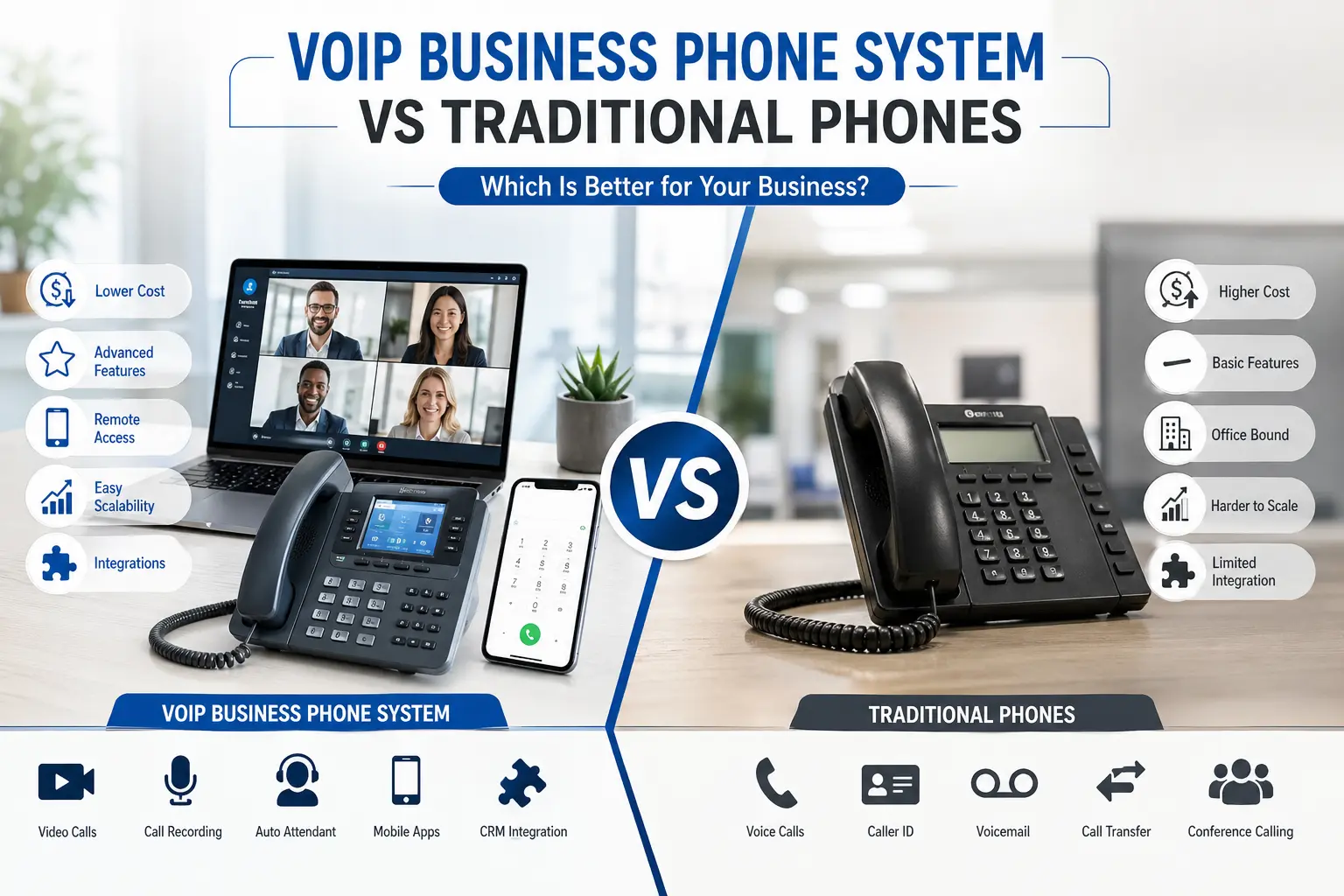
In today’s fast-moving digital world, communication plays a vital role in business success. Whether you run a startup, small business, or large enterprise, choosing the right phone system can directly affect productivity, customer service, and costs.
For decades, traditional landline phones were the standard choice. However, businesses are now rapidly switching to VOIP business phone systems because they offer flexibility, advanced features, and lower costs.
So, which option is best for your business?
In this guide, we’ll compare VOIP business phone systems vs traditional phones, explain the pros and cons of each, and help you make the right decision.
What Is a VOIP Business Phone System?
A VOIP (Voice Over Internet Protocol) business phone system allows businesses to make and receive calls over the internet instead of using physical copper phone lines.
Unlike traditional systems, VOIP converts voice into digital data and transmits it online. As a result, businesses can use desk phones, mobile apps, laptops, or tablets for communication.
Key Features of VOIP Business Phone Systems
A modern VOIP phone system often includes:
- Call forwarding
- Voicemail to email
- Auto attendant
- Video conferencing
- Call recording
- CRM integration
- Mobile and desktop apps
- Virtual phone numbers
Because of these features, businesses can manage communication more efficiently.
What Are Traditional Phones?
Traditional phones, also known as landline phone systems or PSTN (Public Switched Telephone Network) phones, rely on physical telephone lines to make calls.
These systems have been used for decades and are known for stable connections. However, they often lack modern communication tools.
Common Features of Traditional Phone Systems
Traditional systems usually offer:
- Basic voice calling
- Hold and transfer
- Conference calling (limited)
- Caller ID
- Voicemail
Although they are reliable, they can be expensive and less scalable.
VOIP Business Phone System vs Traditional Phones: Quick Comparison
Here’s a side-by-side comparison:
| Feature | VOIP Business Phone System | Traditional Phones |
|---|---|---|
| Technology | Internet-based | Physical phone lines |
| Cost | Lower monthly costs | Higher setup and maintenance |
| Scalability | Easy to scale | Difficult and expensive |
| Mobility | Use anywhere | Office-only |
| Features | Advanced features | Basic features |
| Installation | Quick and simple | Time-consuming |
| Call Quality | High with strong internet | Usually stable |
| Maintenance | Minimal | Higher |
| International Calls | Affordable | Expensive |
| Integration | CRM, apps, software | Limited |
As you can see, VOIP offers more flexibility and cost savings.
Benefits of a VOIP Business Phone System
Businesses are increasingly choosing VOIP for many reasons.
1. Lower Communication Costs
One of the biggest advantages is affordability.
Since VOIP uses the internet, businesses can save money on:
- Long-distance calls
- International calls
- Hardware costs
- Maintenance expenses
Therefore, startups and SMEs often prefer VOIP.
2. Remote Work Flexibility
Today, many teams work remotely or in hybrid environments.
A VOIP business phone system allows employees to:
- Answer calls from anywhere
- Use mobile apps
- Stay connected while traveling
As a result, communication remains uninterrupted.
3. Advanced Features
VOIP systems offer features that improve efficiency.
For example:
Auto Attendant
Automatically directs callers to the right department.
Call Recording
Helps with training and quality assurance.
Voicemail to Email
Allows employees to check messages instantly.
These features improve customer service and team productivity.
4. Easy Scalability
Growing businesses need scalable solutions.
With VOIP, adding new users or numbers is quick and affordable. In contrast, traditional systems require extra wiring and hardware.
5. Integration With Business Tools
Modern VOIP systems integrate with:
- CRM software
- Helpdesk systems
- Email platforms
- Collaboration tools
Thus, teams can work smarter.
Benefits of Traditional Phones
Although VOIP is popular, traditional phones still have some advantages.
1. Reliable During Internet Outages
Traditional phones don’t rely on internet connections.
Therefore, they can work even if your internet goes down.
2. Consistent Call Quality
Landlines usually offer stable call quality without issues like lag or jitter.
3. Familiar Technology
Many businesses feel comfortable using traditional systems because they are easy to understand.
However, familiarity may come at a higher cost.
Drawbacks of VOIP Business Phone Systems
VOIP has many benefits, but it also has limitations.
Internet Dependency
A poor internet connection can affect call quality.
Businesses need:
- High-speed internet
- Reliable bandwidth
- Backup internet solutions
Power Dependency
VOIP may stop working during power outages unless you have backup power.
Drawbacks of Traditional Phones
Traditional phones also have disadvantages.
Higher Costs
Traditional systems often require:
- Expensive installation
- Hardware maintenance
- Higher call rates
Limited Features
They lack advanced tools like:
- Video meetings
- App integrations
- Analytics
Difficult to Scale
Adding lines can be expensive and slow.
Which Businesses Should Choose VOIP?
A VOIP business phone system is ideal for:
Small Businesses
VOIP reduces costs and improves flexibility.
Remote Teams
Employees can work from anywhere.
Growing Businesses
Easy scalability supports expansion.
International Businesses
Lower international calling rates save money.
Companies like Serjax help businesses implement modern VOIP solutions tailored to their needs. Whether you need advanced call management or scalable communication tools, Serjax can provide reliable options.
Which Businesses Should Choose Traditional Phones?
Traditional systems may still suit:
- Businesses in areas with poor internet
- Companies needing basic voice calling only
- Organizations requiring a highly stable offline backup
Even then, many businesses use hybrid systems.
Why Businesses Are Moving to VOIP
The shift toward digital transformation has changed communication needs.
Businesses now require:
- Mobility
- Lower costs
- Smart integrations
- Better customer service tools
As a result, more companies are moving away from landlines and adopting VOIP business phone systems.
Tips for Choosing the Best VOIP Business Phone System

Before choosing a provider, consider these factors:
1. Call Quality
Check HD voice support and uptime guarantees.
2. Features
Ensure it offers the features you need.
3. Pricing
Compare monthly plans and hidden costs.
4. Customer Support
Choose providers with reliable support.
5. Scalability
Make sure the system grows with your business.
Serjax can help businesses select the right VOIP solution based on their communication goals.
FAQ’s
Is a VOIP business phone system cheaper than traditional phones?
Yes, in most cases. VOIP usually has lower setup, maintenance, and call costs.
Can VOIP work without the internet?
No, VOIP needs an internet connection to make and receive calls.
Is VOIP good for small businesses?
Yes, it is affordable, scalable, and packed with useful features.
Are traditional phones more reliable?
Traditional phones can be more reliable during internet outages.
Can I keep my existing business number with VOIP?
Yes, most VOIP providers allow number porting.
Does Serjax provide VOIP business phone solutions?
Serjax can help businesses find and implement the right VOIP communication systems.
Final Thoughts
When comparing VOIP business phone system vs traditional phones, VOIP clearly offers more flexibility, advanced features, and cost savings.
On the other hand, traditional phones still provide reliability in areas with weak internet.
Ultimately, the right choice depends on your business needs. However, if you want scalability, remote access, and modern communication tools, a VOIP business phone system is the smarter long-term investment.
If you’re ready to upgrade your business communication, Serjax can help you choose the best solution for your company.
Read More: Cloud Backup vs Traditional Backup: Which One Actually Protects Your Business Data?
More from Serjax: business phone systems · managed IT services · free 24-point IT audit