Insights · cybersecurity
IT Compliance in Ireland: What Small Businesses Must Know (GDPR & Data Security)
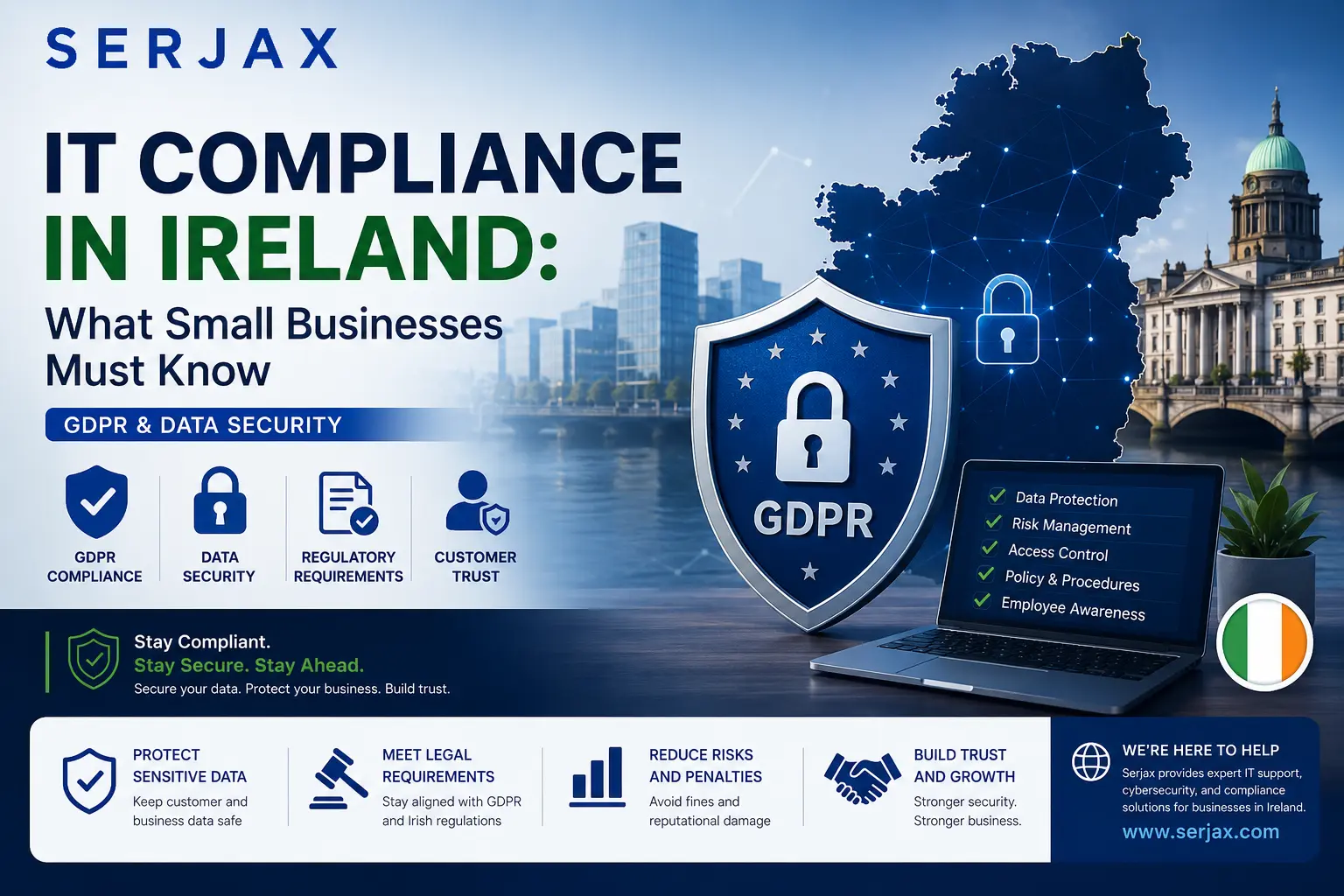
For modern companies, understanding IT compliance Ireland requirements is no longer optional. In 2026, small businesses across Ireland must follow strict data protection, cybersecurity, and privacy regulations to protect customer information and avoid financial penalties.
Whether you run an ecommerce business, healthcare company, accounting firm, or local office, failing to meet compliance standards can seriously damage your reputation and business operations. Therefore, businesses must understand how GDPR, cybersecurity policies, and IT governance work together.
At Serjax, businesses can access managed IT services, cybersecurity protection, and compliance-focused solutions designed to help organizations stay secure and legally compliant.
Why IT Compliance in Ireland Matters for Small Businesses
Modern businesses collect and store large amounts of customer data every day. Consequently, governments and regulators have introduced strict rules to protect sensitive information.
Strong IT compliance Ireland practices help businesses:
- Protect customer data
- Reduce cybersecurity risks
- Avoid GDPR penalties
- Improve operational security
- Build customer trust
- Prevent data breaches
Additionally, compliance frameworks encourage businesses to adopt stronger cybersecurity standards and internal controls.
Understanding GDPR & Data Protection Rules
GDPR remains one of the most important regulations affecting businesses in Ireland.
IT Compliance Ireland Requirements Under GDPR
Businesses handling customer data must follow GDPR principles carefully.
These principles include:
- Lawful data processing
- Transparent data collection
- Secure data storage
- Limited data retention
- Customer privacy rights
Failure to follow these requirements may result in significant financial penalties.
How GDPR Impacts Small Businesses
Many small businesses believe GDPR only affects large corporations. However, this is incorrect.
Even smaller organizations must comply if they process:
- Customer information
- Payment details
- Employee records
- Email databases
- Marketing data
Therefore, every business should review its data handling procedures regularly.
Customer Rights Businesses Must Respect
Under GDPR, customers have rights regarding how businesses manage their personal information.
These rights include:
| GDPR Customer Right | What It Means |
|---|---|
| Right to Access | Customers can request their data |
| Right to Erasure | Customers can request deletion |
| Right to Rectification | Incorrect data must be corrected |
| Right to Data Portability | Customers can transfer their data |
| Right to Restrict Processing | Businesses may need to limit data use |
Understanding these rights is essential for compliance.
Cybersecurity & IT Compliance Ireland Standards
Cybersecurity plays a major role in maintaining regulatory compliance.
Security Measures Required for Compliance
Businesses should implement strong cybersecurity protections to reduce compliance risks.
Important measures include:
- Multi-factor authentication
- Firewall protection
- Data encryption
- Endpoint security
- Secure backups
These protections help businesses safeguard sensitive customer information.
Why Data Encryption Is Essential
Encryption helps protect confidential data from unauthorized access. Therefore, businesses should encrypt:
- Customer records
- Payment information
- Employee data
- Cloud backups
- Internal business documents
Encrypted systems improve both security and compliance readiness.
Employee Security Training & Awareness
Human error remains one of the leading causes of data breaches.
Businesses should train employees to identify:
- Phishing emails
- Suspicious attachments
- Fake login pages
- Social engineering scams
- Weak password practices
Regular security training reduces compliance risks significantly.
Data Storage & Cloud Compliance Best Practices
Businesses using cloud systems must ensure their providers follow proper compliance standards.
Choosing Secure Cloud Solutions
Reliable cloud systems should provide:
- Secure data storage
- GDPR-compliant infrastructure
- Backup monitoring
- Access controls
- Disaster recovery support
At Serjax, businesses can access secure cloud and backup solutions designed for compliance-focused environments.
Access Control & User Permissions
Not every employee should have access to all business data.
Businesses should implement:
- Role-based permissions
- Secure authentication systems
- MFA protection
- Activity monitoring
Limiting access reduces the risk of internal data exposure.
Backup & Recovery Compliance Strategies
Businesses should maintain secure backups to protect against cyberattacks and accidental data loss.
Recommended practices include:
- Automated backups
- Offsite storage
- Encrypted recovery systems
- Disaster recovery testing
Reliable backup systems improve operational resilience and compliance readiness.
Common Compliance Mistakes Small Businesses Make

Many organizations unintentionally create compliance risks through poor IT management practices.
Ignoring Software Updates & Security Patches
Outdated systems create vulnerabilities that cybercriminals can exploit.
Businesses should:
- Enable automatic updates
- Patch systems regularly
- Remove unsupported software
- Monitor security vulnerabilities
Regular updates improve cybersecurity protection.
Weak Password & Authentication Policies
Poor password management increases unauthorized access risks.
Businesses should enforce:
- Strong password policies
- Password managers
- MFA authentication
- Account monitoring
These practices improve account security significantly.
Storing Unnecessary Customer Data
Some businesses collect more data than they actually need. However, unnecessary storage increases compliance risks.
Therefore, businesses should:
- Limit data collection
- Delete outdated records
- Review retention policies
- Minimize sensitive data storage
Reducing stored data lowers exposure risks.
Creating an IT Compliance Strategy for Your Business
Every business should have a structured compliance strategy instead of relying on reactive fixes.
Conduct Regular Security Audits
Security audits help businesses identify weaknesses before they become major problems.
Audits should review:
- Data storage systems
- Employee access controls
- Backup procedures
- Cloud security
- Endpoint protection
Routine assessments improve long-term security posture.
Document Internal Compliance Policies
Businesses should create clear policies covering:
- Data handling procedures
- Password management
- Remote work security
- Employee device usage
- Incident response plans
Documentation improves accountability and compliance consistency.
Work with Compliance-Focused IT Experts
Many businesses lack internal expertise to manage compliance properly. Therefore, outsourcing IT management can reduce operational pressure.
Professional IT providers help businesses:
- Monitor cybersecurity risks
- Improve compliance readiness
- Manage backups securely
- Implement cloud protection
- Reduce downtime
Managed support often saves businesses time and resources.
How Serjax Helps Businesses Stay Compliant
Modern compliance requirements continue evolving rapidly. Consequently, businesses need proactive IT management instead of reactive troubleshooting.
At Serjax, businesses can access:
- Managed IT services
- GDPR-focused security solutions
- Secure cloud infrastructure
- Backup & disaster recovery
- Cybersecurity monitoring
- Endpoint protection
- Compliance-focused IT support
As a result, businesses can improve operational security while reducing compliance risks.
The Future of IT Compliance in Ireland

Cybersecurity regulations and privacy standards will continue evolving in the coming years. Therefore, businesses must remain proactive rather than waiting for problems to occur.
Future compliance trends may include:
- Stronger cybersecurity requirements
- Increased cloud security regulations
- Stricter data privacy enforcement
- Expanded ransomware protection policies
- More advanced risk monitoring systems
Businesses that invest in compliance today will be better prepared for future regulatory changes.
Final Thoughts on IT Compliance Ireland Requirements
Understanding IT compliance Ireland regulations is essential for modern businesses that want to protect customer data, reduce cybersecurity risks, and maintain legal compliance.
Instead of treating compliance as a one-time task, businesses should view it as an ongoing process involving cybersecurity, employee training, secure cloud management, and proactive monitoring.
Most importantly, companies that invest in strong compliance strategies build greater customer trust while reducing operational risks.
With support from Serjax, businesses across Ireland can strengthen cybersecurity, improve GDPR readiness, and maintain secure business operations.
Read More: IT Support Near Mullingar: How to Choose the Right Managed IT Provider.
FAQ’s
What is IT compliance in Ireland?
IT compliance Ireland refers to following cybersecurity, GDPR, and data protection regulations that govern how businesses manage and secure sensitive information.
Why is GDPR important for small businesses?
GDPR protects customer privacy and ensures businesses handle personal data responsibly. Non-compliance can result in financial penalties.
What cybersecurity measures support compliance?
Businesses should implement MFA, encryption, firewall protection, endpoint security, backups, and employee security training.
How often should businesses review compliance policies?
Businesses should review compliance procedures regularly, especially after system updates, security incidents, or regulatory changes.
How can Serjax help businesses improve compliance?
Serjax provides managed IT services, cybersecurity protection, secure cloud solutions, backup management, and GDPR-focused support for businesses in Ireland.
More from Serjax: cyber security services · managed IT services