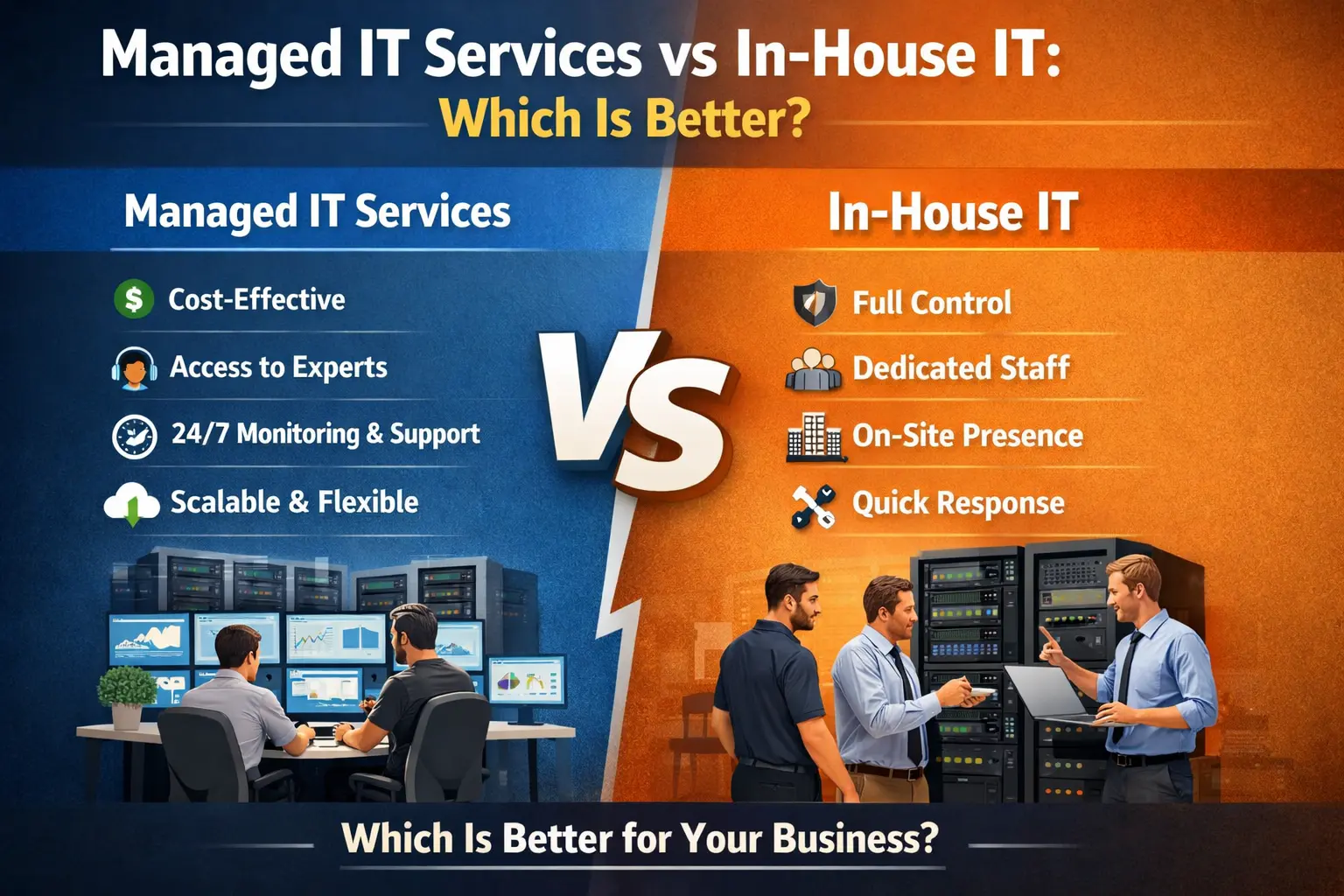
In today’s fast-paced digital world, businesses rely heavily on technology to stay competitive.
However, one critical decision every organization faces is whether to manage IT internally or outsource it to experts. So, Managed IT Services vs In-House IT: which is better?
While both options offer unique advantages, the right choice depends on your business goals, budget, and scalability needs.
In this comprehensive guide, we’ll break down both models, compare their benefits, and help you make an informed decision.
Additionally, we’ll explore how companies like Serjax can support your IT strategy.
What Are Managed IT Services?
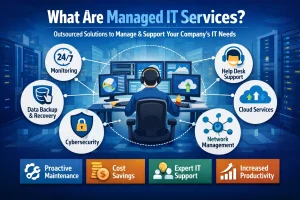
Managed IT Services refer to outsourcing your IT operations to a third-party provider, also known as a Managed Service Provider (MSP). These providers handle everything from network monitoring to cybersecurity and cloud management.
Key Features of Managed IT Services
- 24/7 system monitoring
- Proactive maintenance
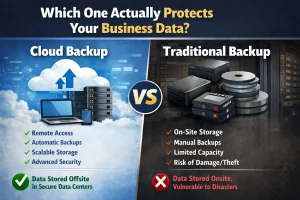
- Data backup and disaster recovery
- Cybersecurity management
- Cloud solutions and support
As a result, businesses can focus on core operations while experts handle technical challenges.
What Is In-House IT?
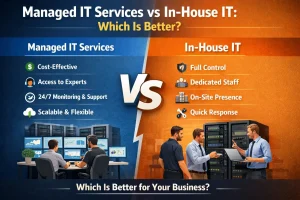
In contrast, In-House IT involves building and managing your own internal IT team.
This means hiring IT professionals, maintaining infrastructure, and handling all technical issues internally.
Key Features of In-House IT
- Dedicated internal team
- Full control over IT operations
- Custom solutions tailored to business needs
- Immediate on-site support
However, this approach often requires significant investment in hiring, training, and infrastructure.
Managed IT Services vs In-House IT: Key Differences
To better understand the comparison, let’s look at a side-by-side breakdown:
| Feature | Managed IT Services | In-House IT |
|---|---|---|
| Cost Structure | Predictable monthly fee | High upfront + ongoing costs |
| Expertise | Access to a team of specialists | Limited to internal team skills |
| Scalability | Highly scalable | Limited by hiring capacity |
| Support Availability | 24/7 monitoring and support | Usually business hours |
| Security | Advanced tools & proactive monitoring | Depends on team expertise |
| Maintenance | Included in service | Requires internal effort |
Clearly, both models differ significantly in terms of flexibility, cost, and expertise.
Benefits of Managed IT Services
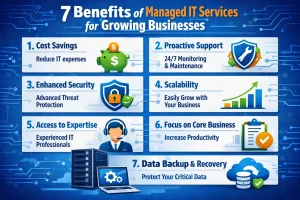
1. Cost Efficiency
First and foremost, managed IT services reduce operational costs. Instead of hiring multiple IT professionals, businesses pay a fixed monthly fee.
2. Access to Expertise
Moreover, MSPs provide access to a wide range of experts. This ensures your business benefits from the latest technologies and best practices.
3. Proactive Support
Unlike reactive IT support, managed services focus on prevention. Therefore, issues are resolved before they impact your business.
4. Scalability
As your business grows, your IT needs will evolve. Fortunately, managed services can scale easily without requiring additional hiring.
5. Enhanced Security
Cyber threats are increasing daily. Consequently, MSPs use advanced tools to protect your data and systems.
Benefits of In-House IT
1. Full Control
One major advantage of in-house IT is control. Businesses can customize systems according to their exact needs.
2. Immediate Response
Since the team is on-site, issues can be addressed quickly without waiting for external support.
3. Better Alignment
Internal teams often have a deeper understanding of company processes. As a result, they can align IT strategies with business goals more effectively.
4. Data Sensitivity
For organizations handling sensitive data, keeping IT operations in-house may provide additional peace of mind.
Challenges of Managed IT Services
Although managed IT services offer many benefits, there are some challenges:
- Less direct control over IT operations
- Dependence on third-party providers
- Potential communication delays
However, choosing a reliable provider like Serjax can significantly minimize these risks.
Challenges of In-House IT
Similarly, in-house IT also comes with drawbacks:
- High operational costs
- Difficulty in hiring skilled professionals
- Limited expertise in specialized areas
- Lack of 24/7 monitoring
Therefore, maintaining an in-house team can become overwhelming, especially for small and medium-sized businesses.
When Should You Choose Managed IT Services?
Managed IT services are ideal if:
- You want to reduce IT costs
- Your business is growing rapidly
- You need 24/7 monitoring and support
- Cybersecurity is a top priority
- You lack internal IT expertise
In such cases, outsourcing to a provider like Serjax ensures efficiency and reliability.
When Should You Choose In-House IT?
On the other hand, in-house IT is suitable if:
- You require full control over IT systems
- Your business has complex, custom IT needs
- You handle highly sensitive data
- You have the budget for hiring and infrastructure
Hybrid Approach: The Best of Both Worlds
Interestingly, many businesses now adopt a hybrid approach. This means combining in-house IT with managed services.
Why Choose Hybrid IT?
- Maintain control over critical operations
- Outsource routine tasks
- Reduce workload on internal teams
- Improve efficiency and scalability
For example, your internal team can handle strategic tasks, while Serjax manages monitoring and security.
Cost Comparison: Managed IT vs In-House IT
Let’s break down the cost difference:
Managed IT Services
- Fixed monthly fee
- No hiring costs
- Reduced downtime costs
- No infrastructure investment
In-House IT
- Salaries and benefits
- Training and certifications
- Hardware and software costs
- Unexpected repair expenses
Clearly, managed IT services offer more predictable and often lower costs.
How to Choose the Right Option
Choosing between managed IT services and in-house IT depends on several factors:
1. Business Size
Small businesses often benefit more from managed services, while large enterprises may prefer in-house teams.
2. Budget
If budget is limited, managed IT services are a cost-effective solution.
3. IT Complexity
Complex systems may require a dedicated internal team.
4. Security Needs
Both options can be secure, but MSPs often provide advanced tools and expertise.
5. Growth Plans
If you plan to scale, managed IT services offer greater flexibility.
Why Choose Serjax for Managed IT Services?
When it comes to reliable IT support, Serjax stands out as a trusted provider. They offer:
- Proactive monitoring and maintenance
- Advanced cybersecurity solutions
- Scalable IT services
- Expert technical support
Therefore, partnering with Serjax allows businesses to focus on growth while ensuring their IT infrastructure runs smoothly.
Conclusion
Ultimately, the decision between Managed IT Services vs In-House IT depends on your business needs.
While in-house IT offers control and customization, managed IT services provide cost efficiency, scalability, and expert support.
In many cases, businesses find that managed services—or even a hybrid approach—deliver the best results.
By partnering with a trusted provider like Serjax, you can streamline operations, enhance security, and drive long-term growth.
FAQs
1. What are managed IT services?
Managed IT services involve outsourcing IT tasks to a third-party provider who manages, monitors, and supports your IT infrastructure.
2. Is managed IT cheaper than in-house IT?
Yes, in most cases. Managed IT services offer predictable monthly costs and eliminate expenses related to hiring and infrastructure.
3. Can small businesses benefit from managed IT services?
Absolutely. In fact, small businesses benefit the most due to cost savings and access to expert support.
4. Is in-house IT more secure than managed IT?
Not necessarily. Managed IT providers often use advanced security tools and provide continuous monitoring, making them highly secure.
5. What is a hybrid IT model?
A hybrid IT model combines in-house IT with managed services, allowing businesses to balance control and efficiency.
6. How do I choose the right IT solution?
Consider your budget, business size, security needs, and growth plans before making a decision.